The Basic Principles Of Edge Networking
Table of ContentsEdge Networking Things To Know Before You BuyThe Edge Networking PDFsFacts About Edge Networking RevealedAn Unbiased View of Edge NetworkingIndicators on Edge Networking You Need To Know10 Easy Facts About Edge Networking Described
Edge computing is changing the method information is being handled, processed, and provided from millions of gadgets around the globe. The explosive development of internet-connected devices the IoT together with brand-new applications that require real-time computing power, continues to drive edge-computing systems. Faster networking innovations, such as 5G wireless, are enabling edge computing systems to accelerate the creation or assistance of real-time applications, such as video processing and analytics, self-driving vehicles, expert system and robotics, among others.Gartner defines edge computing as "a part of a distributed computing topology in which information processing lies close to the edge where things and individuals produce or consume that details." At its basic level, edge computing brings calculation and information storage closer to the gadgets where it's being gathered, instead of depending on a central area that can be countless miles away.
In addition, companies can save cash by having actually the processing done locally, minimizing the amount of data that needs to be processed in a centralized or cloud-based place. Edge computing was developed due to the exponential growth of IoT gadgets, which connect to the web for either receiving information from the cloud or delivering information back to the cloud.
Our Edge Networking PDFs
Network World/ IDGThink about devices that monitor production equipment on a factory flooring, or an internet-connected camera that sends out live video footage from a remote office. While a single device producing information can transmit it throughout a network quite easily, problems develop when the variety of gadgets transferring information at the same time grows.
Not just will quality suffer due to latency, but the expenses in bandwidth can be remarkable. Edge-computing hardware and services assist resolve this problem by being a regional source of processing and storage for a number of these systems. An edge entrance, for example, can process information from an edge device, and after that send just the appropriate data back through the cloud, reducing bandwidth requirements.
These edge devices can include lots of different things, such as an IoT sensing unit, an employee's laptop, their most current smart device, the security cam or even the internet-connected microwave oven in the workplace break space. Edge entrances themselves are considered edge gadgets within an edge-computing infrastructure. For numerous companies, the cost savings alone can be a motorist towards releasing an edge-computing architecture.
Edge Networking Fundamentals Explained
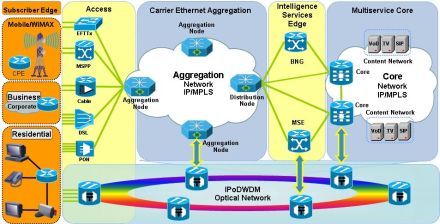
Applications such as virtual and augmented truth, self-driving automobiles, clever cities and even building-automation systems require fast processing and response." Edge computing has developed considerably from the days of isolated IT at ROBO click now [Remote Workplace Branch Office] areas," states Kuba Stolarski, a research director at IDC, in the "Worldwide Edge Infrastructure (Compute and Storage) Projection, 2019-2023" report (Edge Networking).

Fascination About Edge Networking
From a security standpoint, information at the edge can be bothersome, particularly when it's being dealt with by different devices that may not be as protected as a central or cloud-based system. As the variety of IoT gadgets grow, why not try this out it's imperative that IT understand the potential security concerns around these gadgets, and to make sure those systems can be secured.
Moreover, varying device requirements for processing power, electrical energy and network connectivity can have an effect on the reliability of an edge device. This makes redundancy and failover management important for gadgets that process information at the edge to ensure that the data is provided and processed properly when a single node decreases.
Instead of simply using the quicker speeds and telling business to continue processing data in the cloud, lots of carriers are working edge-computing strategies into their 5G implementations in order to provide faster real-time processing, specifically for mobile gadgets, linked automobiles and self-driving automobiles. In its recent report "5G, IoT and Edge Compute Trends," Futuriom composes that 5G will be a driver for edge-compute technology.
Not known Facts About Edge Networking
It cites low-latency applications that consist of IoT analytics, device knowing, virtual truth, self-governing lorries as those that "have brand-new bandwidth and latency qualities that will require assistance from edge-compute facilities." In its predictions for 2020, Forrester likewise pointed out the need for on-demand compute and application engagements would contribute in driving the growth of edge computing in 2020.
Join the Network World neighborhoods on Facebook and LinkedIn to comment on topics that are top of mind (Edge Networking). index Copyright 2019 IDG Communications, Inc.
Edge computing is a dispersed computing paradigm that brings computation and data storage closer to the area where it is required, to improve action times and conserve bandwidth. The origins of edge computing depend on content shipment networks that were produced in the late 1990s to serve web and video material from edge servers that were deployed close to users.
The Basic Principles Of Edge Networking
Modern edge computing significantly extends this technique through virtualization innovation that makes it much easier to release and run a wider series of applications on the edge servers. The edge computing facilities One definition of edge computing is any type of computer system program that delivers low latency nearer to the requests.